


A globally consistent approach to climate risk
Climate change might be global, but its impacts can be hyper-local. This means that climate data needs to get granular, says ICE’s Larry Lawrence
Environmental Finance: What approach does ICE take to assessing climate-related exposures?
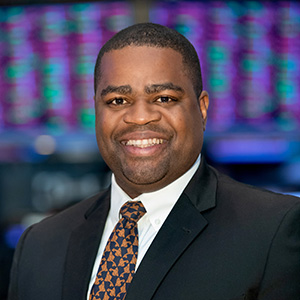 Larry Lawrence: At ICE, we take a high- resolution and globally consistent approach to assessing climate-related exposure. Our climate risk data is built on top of a next-generation dataset of over 1.6 billion buildings worldwide – including the location, shape and orientation of each one. On top of this, we’ve built large-scale machine learning models to estimate key characteristics of each building. By combining these datasets with our global extreme temperature, flood, wildfire and hurricane hazard models, we can estimate projected losses at the building level. This level of granularity is powerful because it allows us to assess extreme temperature, flood, wildfire and hurricane risks to all kinds of financial assets, wherever they are in the world.
These assets include about 3 million corporate locations – including factories, retail facilities, offices, distribution centres and many more – that are linked to about 20,000 public companies and 5 million private companies. To assess a company’s global climate exposure, we map a company’s locations to nearby buildings and their associated risks. We use this same approach for other asset classes as well, aggregating risks associated with buildings linked to private companies, real estate and whole loan portfolios, mortgage-backed securities, municipalities and sovereign nations. I can’t think of any other group that is taking this kind of granular, globally consistent approach.
EF: What about short-term extreme weather risks – how can you help investors there?
LL: Most clients we work with look at climate risk in two dimensions. One is how to manage climate risk in the near term and the other is how to understand and manage risk related to climate-related events happening in real time, such as the Los Angeles wildfires that occurred in early 2025.
Last year, we launched a tool called Hazard Watch to provide our clients with information about their exposure to active floods, wildfires, earthquakes, tropical cyclones and tornadoes in near real time. Users can upload their portfolios and see which of their assets or securities are exposed to these events as they unfold.
For example, during last year’s active US hurricane season, we identified over 350,000 corporate asset locations, almost 3,000 local municipal issuers and around 11,000 properties in mortgage-backed security deals that were exposed to high wind speeds. This kind of analysis can be valuable information for investors seeking to manage and respond to risks associated with natural hazards as they happen.
EF: How do you address climate transition risk?
LL: We have built a robust, forward-looking framework to assess the financial risks arising from the global shift toward decarbonisation.
What makes our approach unique is our coverage across a broad number of asset classes, including corporates, sovereigns, municipals, mortgage-backed securities and real estate. Our goal is to help users with a diverse set of asset classes make informed decisions based on the risks across their portfolio.
For listed corporates, we offer detailed transition risk metrics for around 10,500 companies, including production-based emissions intensity pathways, company-specific growth and carbonisation targets, sector-specific climate scenarios and estimates of the capex required.
We also just announced coverage of physical and transition risk for 5 million private companies globally, integrating data from Dun & Bradstreet. We’re hoping to introduce more transparency and give people data to start making decisions in this part of the market. It’s something that I’m pretty excited about.
EF: What demand are you seeing for nature-related data?
LL: We’re seeing a lot of interest. Everyone is trying to link nature to materiality in some way. They’re looking for use-case examples of how nature-related risks have materially impacted companies, and what that impact has been on performance of the organisation. Right now, it’s hard to do that, but I think we’ll get there.
We’ve entered into a strategic alliance with NatureAlpha to integrate its dataset across our fixed income universe of 1.4 million bonds, as well as the broad equity universe.This dataset helps users understand their nature risk, their biodiversity footprint and their proximity to nature-sensitive areas. All of this is built on asset-level data.
EF: What’s next for ICE’s sustainability data offering?
LL: We’re working hard to improve our asset-level data with our geospatial technology and expand our Hazard Watch capabilities.We are also deepening our integration of nature and biodiversity metrics, especially regarding the nexus of nature and climate. Most clients are looking at them as individual factors but, over time, we’ll have to consider them together.
We’re also working to make our data available to a broader audience. Over the last 10 or 15 years, investors have needed to go to a number of different vendors in order to source all of the different types of necessary data. If we want people to understand the value of this data, we need to make it easy to access, easy to use and much more affordable. I think people are looking to companies like ICE to help them consolidate their sustainability data needs and meet them in a holistic way.
Larry Lawrence is vice president, sustainable finance data, at ICE in Boston, Massachusetts.
For more information, see: www.ice.com/climate
